
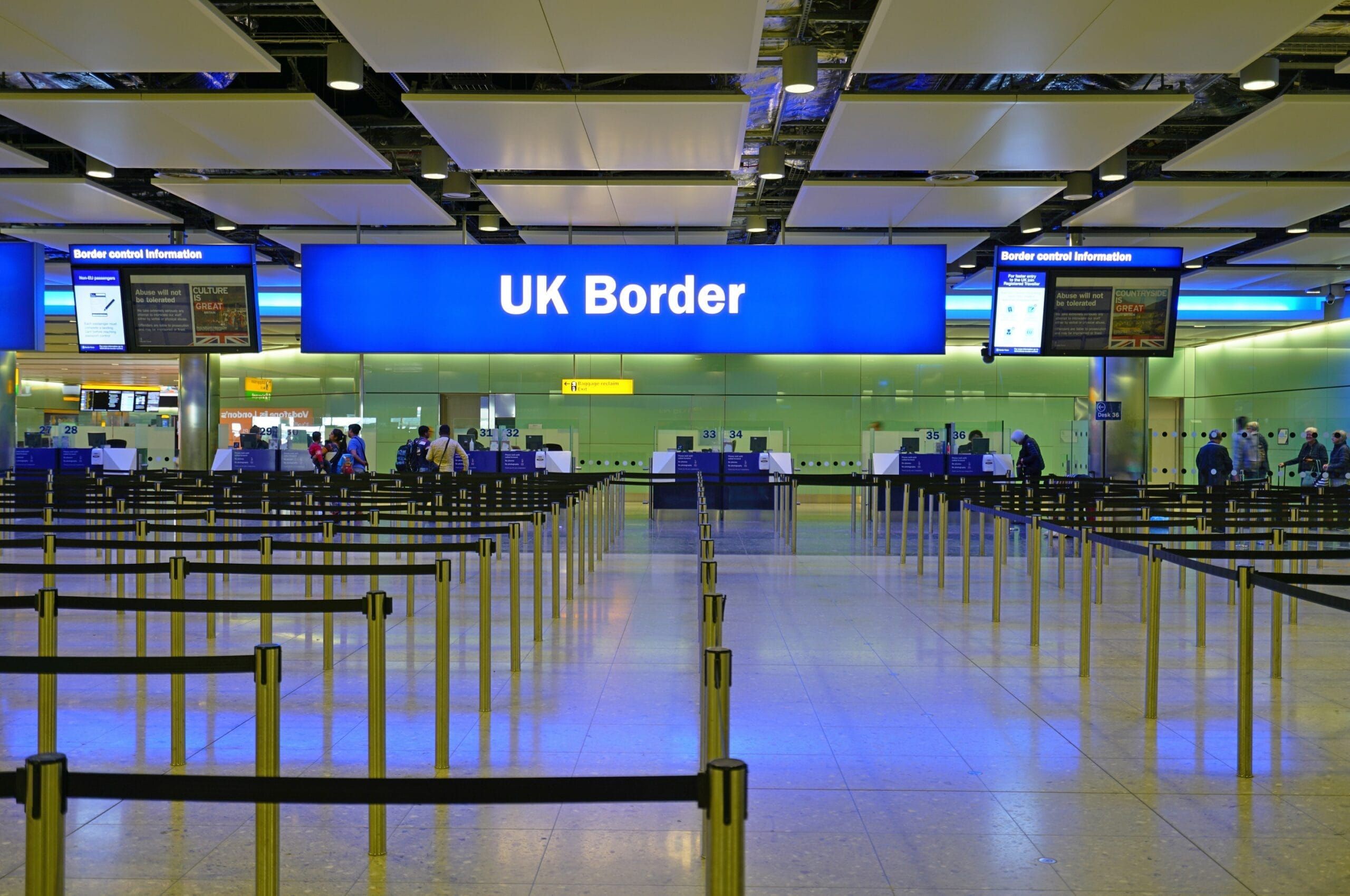
A common question raised by applicants is whether they are allowed to leave the United Kingdom after submitting a visa or immigration application from within the UK while waiting for a decision from the Home Office.
ㅤ
Since the introduction of the UK Visa and Citizenship Application Services system in November 2018, most in-country applicants are no longer required to submit their passport during the application process. As a result, some applicants assume that they are free to travel outside the UK while their application is pending. However, under UK immigration law, leaving the UK during this period may lead to significant consequences.
ㅤ
This article briefly explains the relevant legal rules and practical considerations.
ㅤ
Legal Basis
ㅤ
According to Immigration Rules Paragraph 34K, if an applicant leaves the Common Travel Area before a decision has been made on their visa or immigration application, the application will normally be treated as automatically withdrawn.
ㅤ
The Common Travel Area includes:
ㅤ
• United Kingdom
• Ireland
• Isle of Man
• Channel Islands
• Guernsey
ㅤ
In other words, if an applicant departs from any part of the Common Travel Area before receiving a decision, the pending application will usually be considered withdrawn by the Home Office.
ㅤ
Two Common Scenarios When Leaving the UK
ㅤ
The consequences of leaving the UK during the application process depend largely on the status of the applicant’s previous visa.
ㅤ
Scenario 1: The Previous Visa Has Expired (Section 3C Leave)
ㅤ
If an applicant submitted a new application before their previous visa expired but left the UK after that visa had already expired, their lawful status in the UK would usually rely on Section 3C Leave.
ㅤ
Section 3C leave allows applicants to remain lawfully in the UK while their immigration application is being considered. However, if the applicant leaves the UK during this period:
ㅤ
• Section 3C leave will automatically come to an end
• The pending application will be treated as withdrawn
• The applicant will not be able to return to the UK under that application
ㅤ
In most cases, the individual would need to submit a new visa application from outside the UK.
ㅤ
For certain visa holders, such as work visa holders or dependants, this may interrupt their continuous residence in the UK. For applicants seeking settlement (Indefinite Leave to Remain), this may even mean restarting the qualifying residence period.
ㅤ
Scenario 2: The Previous Visa Is Still Valid
ㅤ
If the applicant leaves the UK while their previous visa is still valid, they may generally return to the UK before that visa expires.
ㅤ
However, it is important to note the following:
ㅤ
• The pending application will still be treated as withdrawn once the applicant leaves the Common Travel Area
• The applicant would need to submit a new visa application after returning to the UK
ㅤ
There may also be a small risk at the UK border. Immigration officers may question whether the applicant intends to overstay in the UK. In most situations, if the applicant clearly explains that they are returning to the UK in order to submit a new application for extension, switching, or settlement, entry is usually permitted.
ㅤ
Application Fees and Refunds
ㅤ
If a visa application is treated as withdrawn due to departure from the UK, the fee arrangements generally operate as follows:
ㅤ
• The Immigration Health Surcharge (IHS) is usually refundable
• The visa application fee may or may not be refunded, depending on whether the Home Office has started processing the application
• If the applicant has booked a biometric appointment but has not yet attended it, the appointment can normally be cancelled online and the fee refunded
ㅤ
Practical Advice: Priority Processing
ㅤ
In practice, we sometimes encounter situations where applicants realise they need to travel after submitting their visa application but did not select a priority service. As a result, they are required to wait until a decision is made.
ㅤ
For applicants who may have upcoming travel plans or who wish to receive a decision more quickly, it may be advisable to consider the Home Office’s priority processing services, such as:
ㅤ
• Priority Service (approximately five working days)
• Super Priority Service (next working day decision)
ㅤ
However, not all visa categories offer priority services. Even where such services exist, they may occasionally be unavailable due to high demand or operational limitations. Applicants may wish to check the booking system again at a later time if the option is not initially available.
ㅤ
Exception: Citizenship Applications
ㅤ
An important exception applies to British Naturalisation Application.
ㅤ
Citizenship applications are governed by different legislation. Applicants are generally allowed to travel in and out of the UK while waiting for a decision on their naturalisation application without the application being treated as withdrawn.
ㅤ
The Home Office currently states that citizenship applications typically take around six months to process. However, in practice, some applications may experience longer processing times.
ㅤ
Conclusion
ㅤ
Except for citizenship applications, applicants are generally advised not to leave the UK after submitting an in-country visa or immigration application until a decision has been made.
ㅤ
Leaving the UK during this period may result in the application being automatically withdrawn and could affect future immigration plans or continuous residence requirements.
ㅤ
Disclaimer
ㅤ
This article is provided for general information purposes only and does not constitute legal or immigration advice. Immigration matters are highly fact-specific, and individuals should seek professional advice based on their personal circumstances.
ㅤ