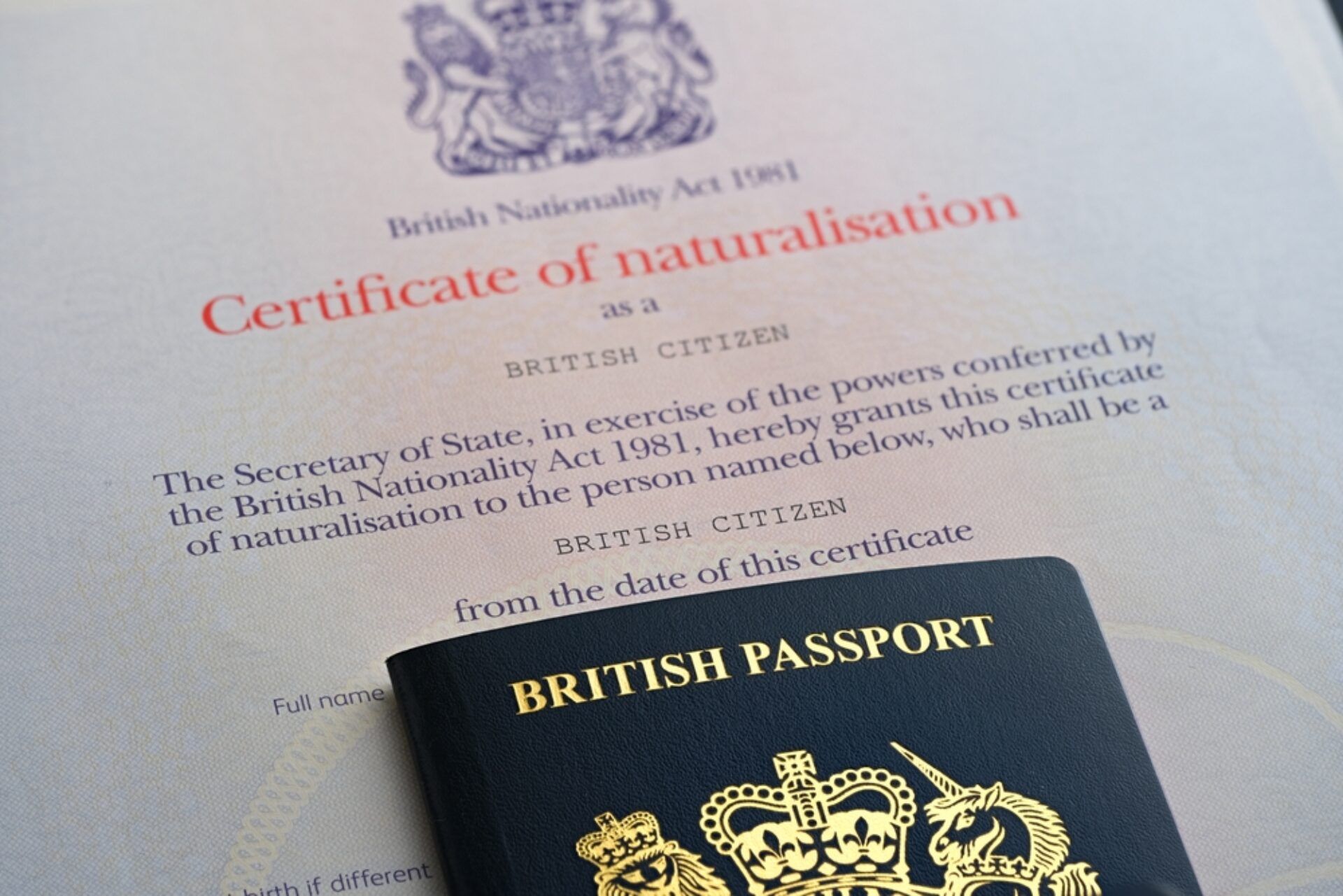
British Citizenship and UK Passport Application
ㅤ
Becoming a British citizen is a significant milestone. It grants you the right to live in the UK permanently without immigration restrictions, as well as the ability to apply for a British passport.
Unlike visas or settlement status, British citizenship does not lapse due to time spent outside the UK or changes in residence, providing long term security and stability.
For individuals who have already obtained Indefinite Leave to Remain (ILR) or settled status, naturalisation is the most common route to British citizenship. Applicants must meet a number of legal requirements, including residence criteria, good character, and knowledge of the English language and life in the UK.
Given the complexity of the requirements and the importance of accuracy, seeking professional legal advice can help ensure a smooth application process and minimise the risk of delays or refusal.
ㅤ
Basic Requirements
ㅤ
To apply for British citizenship by naturalisation, applicants must typically meet the following requirements:
ㅤ
Be aged 18 or over
Have full mental capacity to understand the nature of the application
Hold Indefinite Leave to Remain (ILR) or settled status for at least 12 months (unless applying as the spouse of a British citizen)
Meet the residence requirements
Meet the English language requirement
Pass the Life in the UK Test
Satisfy the good character requirement
Intend to make the UK their main home
ㅤ
Age Requirement
ㅤ
Applicants must be at least 18 years old at the time of application.
Individuals under 18 cannot apply for naturalisation and must instead apply for registration as a British citizen, depending on their circumstances.
ㅤ
Mental Capacity Requirement
ㅤ
Applicants must have sufficient mental capacity to understand the nature and consequences of the application.
In certain circumstances, this requirement may be waived where it is considered to be in the applicant’s best interests.
ㅤ
Intention to Reside in the UK
ㅤ
Unless applying as the spouse of a British citizen, applicants must demonstrate an intention to continue living in the UK or to maintain their principal home in the UK.
ㅤ
This is assessed based on factors such as residence history, family ties, and employment. Once citizenship is granted, this requirement no longer applies.
ㅤ
English Language Requirement
ㅤ
Applicants must demonstrate sufficient knowledge of English (normally at B1 level or above). This can be satisfied by:
ㅤ
Providing an approved Secure English Language Test (SELT)
Holding a degree taught in English
Being a national of a majority English speaking country
ㅤ
Exemptions may apply in the following circumstances:
ㅤ
Applicants aged 65 or over
Applicants with a long term physical or mental condition affecting their ability to meet the requirement
ㅤ
Life in the UK Test
ㅤ
Applicants must pass the Life in the UK Test, which assesses knowledge of British history, culture, and society.
ㅤ
Exemptions may apply to:
ㅤ
Applicants aged 65 or over
Applicants with long term medical conditions
ㅤ
Good Character Requirement
ㅤ
The good character requirement is a key part of the naturalisation assessment, and is subject to strict Home Office guidance.
ㅤ
Applicants must demonstrate that they:
ㅤ
Have no serious criminal convictions
Have complied with UK immigration laws
Have not engaged in deception or misrepresentation
Have no significant outstanding debts to the Home Office
ㅤ
Where an applicant has a criminal record, eligibility will depend on the nature of the offence and the time elapsed since conviction.
ㅤ
For example:
ㅤ
More serious offences (such as custodial sentences) will usually require a longer period before eligibility
Non custodial offences may also require a waiting period
ㅤ
In limited cases, minor and one off offences may be disregarded at the Home Office’s discretion.
ㅤ
It is important to note that:
ㅤ
Overseas convictions are treated as if they occurred in the UK
Applicants must disclose all relevant character information, including criminal records
The Home Office will conduct thorough background checks
ㅤ
Failure to meet the good character requirement will normally result in refusal.
ㅤ
In addition, unlawful entry to the UK within the last 10 years may have a significant negative impact on the application.
ㅤ
Residence and Absences
ㅤ
For applications based on 5 years’ residence, applicants must normally demonstrate:
ㅤ
No more than 450 days outside the UK in the last 5 years
No more than 90 days outside the UK in the last 12 months
ㅤ
However, the Home Office retains discretion in certain cases.
ㅤ
For example:
ㅤ
Slightly exceeding the absence limits may be acceptable
Stronger ties to the UK (such as family, employment, and long term residence) may support a discretionary decision
ㅤ
In practice, the greater the absences, the higher the risk. Each case should be assessed individually.
ㅤ
Referees
ㅤ
Applicants must provide two referees who meet the following requirements:
ㅤ
Must have known the applicant for at least 3 years
One referee must be a person of professional standing (such as a doctor or accountant)
The other referee must normally be a British citizen aged 25 or over
ㅤ
Referees must also:
ㅤ
Not be related to the applicant
Not be related to each other
Not act as the applicant’s legal representative
Not be employed by the Home Office
Not have recent serious criminal convictions
ㅤ
Special Considerations for EU Applicants
ㅤ
For applicants who obtained settled status under the EU Settlement Scheme (EUSS), policy changes have clarified that:
ㅤ
The absence of Comprehensive Sickness Insurance (CSI) during periods of study or self sufficiency will generally not affect a naturalisation application.
ㅤ
In most cases, proof of settled status is sufficient to demonstrate lawful residence.
ㅤ
Refusal and Next Steps
ㅤ
If a naturalisation application is refused, applicants may still consider further options depending on the circumstances.
ㅤ
It is important to note that naturalisation applications do not generally carry a full right of appeal. In many cases, applicants will need to submit a fresh application or address the issues identified in the refusal.
ㅤ
In practice, many refusals arise not because the applicant is ineligible, but due to insufficient documentation or technical errors in the application.
ㅤ
It is therefore advisable to seek a professional assessment before taking further steps, in order to avoid repeating the same issues.
ㅤ
Professional Advice
ㅤ
While British citizenship applications may appear straightforward, in practice they involve detailed legal and evidential requirements.
ㅤ
Issues such as residence calculation, absences, consistency of documentation, and good character assessment can all significantly impact the outcome of an application.
ㅤ
We frequently assist clients who have previously applied independently and encountered difficulties or refusals.
ㅤ
A structured pre-application assessment can significantly reduce risks and improve the likelihood of success.
ㅤ
We can assist with:
ㅤ
Assessing your eligibility and identifying potential risks
Reviewing residence and absence records
Preparing and refining supporting documentation
Advising on good character considerations
Guiding referee selection and compliance requirements
Providing strategic advice following a refusal
ㅤ
We are committed to providing clear, practical, and results-focused legal support throughout your application process.